
Imposter syndrome is that nagging feeling that you are not really qualified, undeserving of your accomplishments, or someone will “find out” you do not belong at any moment. It can sneak into our careers, businesses, and even our personal lives, impacting confidence, decision-making, and ultimately how far we allow ourselves to go. But here’s the truth: you are more than enough. Diane Umutoni, Co-Founder and Executive Director of Win Together Canada Foundation, is here to uncover what imposter syndrome really is, why it shows up so strongly for women, and most importantly, how to break free from it for good.
Watch the episode here
Listen to the podcast here
Welcome back to another episode of You Are YOU Unapologetically, where we dive into real conversations that empower you to show up unapologetically as yourself, owning your own story, embracing your uniqueness, and living with bold authenticity. That’s what I’m talking about. I’m your host, Dr. Kim R. Grimes. This conversation addresses something that solidly plagues everyone. Are you ready for it? Imposter syndrome?
It’s that feeling that you don’t belong, that feeling that you’re not qualified, or that feeling that you’re not worthy of your achievements. It’s that voice in your head, I call it head chatter, that is telling you that you somehow fooled everyone, and that you are just waiting to be exposed. Let’s be crystal clear, imposter syndrome is a lie.
With the help of my phenomenal guests, we will tackle this important topic. I always have phenomenal guests on this show. All of you know that all of my guests are phenomenal because they are ordinary people like you and me. With the wisdom of our guest, we are going to talk about how to recognize imposter syndrome, how to push back against it, and most importantly, we’re going to talk about how to overcome it for good, and I mean for good.
I know I say this time and time again, but every time I have a new guest, they fit the bill of being phenomenal. You hear it every time. I guess because I’m in that space where I’m always finding phenomenal people. Let me tell you about our guest. Our guest is the co-founder and executive director of Win Together Canada Foundation, a charitable organization dedicated to empowering not only families but especially young people, empowering them to thrive both emotionally and financially.
Under our guest’s leadership, the foundation has supported many children and youth in discovering their full potential, giving them the confidence, skills, and mindset to succeed. She is also the facilitator of Take Your Idea to the Next Level, a hands-on business training program delivered in partnership with Peace Through Business. The program helps aspiring women entrepreneurs move from ideas to action, offering practical tools and support along the way.
In 2025, she was recognized with an award from the Enterprising Women Foundation for her work in advancing women’s leadership and entrepreneurship, along with her professional work. Our guest is a devoted wife and a mother of two daughters and a young son. She balances family and leadership with grace, strength, and love. Please help me welcome our guest as we’re going to talk about and dive into our conversation about imposter syndrome in women, and how to overcome it for good. Please join me and help me welcome our guest, Mrs. Diane Umutoni. Welcome.
Thank you.
How Dr. Kim And Diane Met Each Other
I’m so glad you’re here. Thank you so much for saying yes to being on our show, You Are YOU Unapologetically. Let me do this because this is what I do with all of our guests. I want you to share with our audience how we met. Please share with them how we met.
Thank you so much for inviting me. This is an honor for me. How we met was a journey, meeting you, Dr. Kim. I met Dr. Kim during the conference of the Enterprising Women Foundation in Nashville. She was among the people who were welcoming guests, and I was among the guests. She was so awesome. For all the questions we had, we went through her. She was easy to talk to, and she was easy to ask questions to. I fell in love with her. We took pictures together. Thank you so much, Dr. Kim. That was awesome.
You’re so welcome and thank you. We had a wonderful time at an Enterprising Women conference. I get the opportunity to work the registration table, where I get to meet all of these phenomenal women. A shout-out for the Enterprising Women Foundation, or the Enterprising Women Awards. If you haven’t been, just google Enterprising Women Awards Ceremony, and you’ll find it.
What Is Imposter Syndrome
Let’s do this. Let’s get this party started because I believe every guest that I invite to the show is here to have a party. We’re here to have fun. Let’s get this party started. What I would love for you to answer is the question of what imposter syndrome is. What is that? Have you ever experienced it personally or professionally? If you are experiencing both in areas of your life, please share.
For me, imposter syndrome is self-doubting yourself. You believe that you are not capable of doing what you are doing. You have a fear of being found, that you are not able to do what you say you do, or that you are not you. Sometimes you’re scared. You are fearing people and and you’re not you. I experienced imposter syndrome when we moved from Montreal to Alberta.
First of all, I’m a French speaker. I immigrated to Canada. I went to do my master’s degree. My schools were in French, and then we moved to Alberta. Why did we even move? At that time, my brother-in-law was in Alberta, and then he convinced my husband to move to Alberta because life is good in Alberta. We accepted it and we moved. I was pregnant.
In Alberta, 98% of people speak English, and only 2% speak French. You understand that. You can’t find a job as a French speaker, where I did all my schooling. It was hard. I was pregnant, and after three years, I went back to find a job. Finding a job was hard for me. I did interviews, and I couldn’t. I then started to doubt myself. Imposter syndrome kicked in because I had voices telling me, “When you go to interviews, no one will understand you. No one can understand you because your English is so down, so you’re not going to find a job.”
I started to go far from people. I was saying, “I’m not enough. I regretted all my studies that I did in French. All my degrees I had, I started regretting them. I started feeling that I’m not smart enough. I’m not worthy. I was even scared, “What am I going to do?” I was saying, “It’s hard. Even though I am learning English, no one will understand me. Even my accent.” It was a hard time for me. I started to isolate myself from people who I know speak English very well. That’s how my life’s imposter syndrome came.
Why Women Are More Prone To Imposter Syndrome Than Men
I heard you say earlier that there was a percentage of only speaking in English. I thought I heard 8%, and that’s why I was like, “Wow,” but you said 80%. The small percentage that only spoke French, but I got what you’re saying. I get it. Why do you think women are more likely to experience imposter syndrome than men?
As women, we have high expectations that we put on ourselves. We have our family, careers, and many things. We want to prove to ourselves that we can achieve all of that stuff. When some problems arise or when something happens in your family, you take it personally. Most women take all things personally. They internalize all those bad emotions. Everything that happens to your work or family, you think it’s because of you. You think that maybe you’re part of the problem. You’re the one who brought this. Our thoughts are more internal.
We tend to put high expectations on ourselves. Share on XFor men, most of them externalize their thoughts. If something is happening, they can find different ways. For us, when some areas are not doing great, it can even impact the other areas. Let’s say, if something is not going my way, it can impact the way I’m communicating with my husband, or the way I’m communicating with my kids. That’s why most women have imposter syndrome. That’s what I thought.
I hear you. Men are not as emotional as we are. We are emotional beings, women that is. We internalize a lot of things. I clearly agree with you there. Sometimes, men could brush stuff off, where we were like, “I can’t brush this off.” Our emotions will kick in and tell us to pay attention, “This is what you need to do.” I believe we all have our own amount of what I call head chatter. I believe we all have that, but how do we manage it? I’m not saying that men manage it better. I just feel, as you said, that women internalize things more. There are studies out there that prove that women internalize things more, and we are more emotional than men are.
Common Behaviors Of Women Dealing With Imposter Syndrome
That being said, what are some of the common signs or behaviors that you experience, or that women can look for to recognize that they are dealing with imposter syndrome in themselves, and also with other women showing up? I love for people to be authentic in themselves. What would you say are some common signs or behaviors to look for within you or that you may see in other women who are also dealing with imposter syndrome? I got to get it out of my mouth.
Some of the signs may be feeling like you don’t fit in. You used to go to some places, but now you don’t fit in. You don’t belong. You are feeling that you don’t belong. For example, I wasn’t feeling that I belonged where people speak English. If people are speaking French, I would be so happy to go to the party. I’m so happy to be with the moms who are speaking French, but when you come speaking English, I didn’t feel good. I wasn’t feeling good because I was saying, “If I say something, no one will understand me.”
The other sign is that you avoid speaking up. For example, someone was asking me to speak up. I couldn’t. I was behind all the time. Speaking on podcasts was a big no-no. Sometimes, when you have imposter syndrome, you are behind the scenes. It depends on why you have that imposter syndrome. For me, I was almost behind all the time. I didn’t want people to notice me. I didn’t want people to know me. I was just behind.
The other thing is comparison. People who have imposter syndrome compare themselves to other people whom they feel are capable. They find that all the time they are not as good as the other person. All the time, they are not as beautiful as the other person, or they are not doing good as the other person. I say there is a rating. For most of them, there is a rating. They don’t want to be where people can judge them. Those are signs that we need to check and see that we don’t get imposter syndrome.

It’s losing your voice, and I’m not saying going hoarse. As you were saying, you didn’t have a voice. You hid behind and you didn’t want to go to these places because you were uncomfortable there. Even if you had to go and show up, you wouldn’t say anything. You wouldn’t allow the true you to come out because of the current concern or the chatter in your head that’s saying, “They are not going to understand you. They’re not going to relate to you because you’re different.”
Strategies And Tools To Overcome Imposter Syndrome
What I hear is not embracing your differences but instead hiding them and then trying your best to fit in when your head is telling you, “You’re not fitting in here.” You’ll show up less than. You show up not being the true you. With that, what strategies or tools did you use that you can share that women can use to overcome imposter syndrome on a daily basis? What can they do? Share, please.
I will be talking about what I did. First of all, because I’m a Christian, I started to realize that I am beautifully and wonderfully made. God says that I am beautifully and wonderfully made. If He says that, it’s true. We are beautifully and wonderfully made. That inner voice that is telling me, “You are not enough, you cannot do this, you cannot do that, you shouldn’t be there,” I need to shut down that voice.
I’m telling any woman who is out there that we need to shut those voices. I’m still on that journey, but we need to shut those voices that are telling you, “You are not beautiful, you are not enough, see what you did? See what you did there? See what you did not achieve.” We are in that progression, so we shouldn’t listen to those voices. The second thing was through you, Dr. Kim. Remember? I do not even have enough words to thank you.
You’re welcome.
When we met, you gave me an exercise to do. That exercise was very challenging for me because at that time, I had a big achievement, but I was behind the scenes. In many of our organizations, all the time, it was my husband who was giving speeches and doing everything with me. I was behind. I was working very hard, but behind the scenes. When we met, I realized that I am beautifully and wonderfully made, but you also gave me an exercise. The exercise was to state every day four things that I appreciate for two weeks. At the beginning, I couldn’t even have things for three days, and you were asking me for two weeks. I said that I cannot do this, but I did the exercise anyway.
What did you find exactly?
I find that I have many things. Do you remember, I sent you my documents? At the end, I now understand why I’m doing what I’m doing, and why God created me the way I am. Now, I realize my purpose. It is beautiful. People need to find it. They need to do that exercise with you. That was very rewarding for me. I can’t thank you enough. Thank you so much for helping me.
If this is your first time tuning in to our show, Diane is talking about the Path to Greatness exercise, which we spoke about many times here. You can download it for free from anywhere on our website. I have multiple. I’m not even going to list out all the websites that I have, but you should be able to get it from the website where we post all of our shows. Path to Greatness is the name of it. You did exceptionally well. Not only that. I want to remind our audience to take the challenge and do it. Remember that it’s not just a tool for one-time use. It’s a tool that you take with you for the rest of your life.
What I heard you say, Diane, is that this tool helps you to uncover your greatness. Although you were saying, “I know the word, I know that God says I’m beautifully and wonderfully made,” this exercise helps you to clearly see how you are beautifully and wonderfully made. Instead of just looking at your physical body, I hear you saying that this exercise had you go inward and show you everything about you and how you are beautifully and wonderfully made.
Because of that, you then did away with the imposter syndrome. You’re no longer hiding behind your husband when he speaks, doing the things, or doing all the work behind the scenes. You’re not doing that. You’re stepping up, being authentic, being you, and walking and being your true self. That’s why you’re here on You Are YOU unapologetically. We say it all the time. You owe no one an apology when you’re being you. I owe an apology when I’m being me. That’s what I hear you saying. What a wonderful strategy tool that you share for people to implement in their daily lives, so they can overcome imposter syndrome.
They’re letting me back. Also, to add on that, we need to be surrounded by positive-minded people, like when I met you. Do not be surrounded with people who are consistently telling you down, that you’re not worthy, you cannot do this, and you cannot do that. I remember when we met, you told me, “You can do this. Do this exercise.” I know it will take you from one level to the other level, and it’s deep. Try to find people who are very positive in your cycle. Go to those people. The ones who are putting you down don’t have any place in your life while you are trying to work on your imposter syndrome. Maybe the last thing that I can answer with that question is celebrating your progress. In celebrating your progress, you are transitioning from where you are to the next level, so celebrate.

We’re all about celebrating, even if it’s a baby step.
Yes. Even if it’s a baby step, celebrate, and everything will be okay.
How Women Can Reframe Their Thoughts
You have shared some juicy nuggets. Thank you so much for even sharing your story of how you wouldn’t go to places, or if you did, you wouldn’t say anything. That is how you would show up and do those things. You recognized and remembered how you were beautifully and wonderfully made, and then you shared the tool that made a difference in your life, where you are free from imposter syndrome. You overcame it for good. With me saying that, how can women begin to reframe their thoughts and build self-confidence to combat imposter syndrome in the long term? You shared some things in what you were saying, but let’s be for the long haul, like for good.
With imposter syndrome, all the time, you have the inner voices that are telling you that you are not enough.
I call them head chatter.
Instead of believing in those voices, tell them, “No, I am in my transition. I am progressing.” That’s what I did. Those voices that are telling me, “No one will understand.” Do you know what I say? “It’s not about whether they understand me or don’t understand me, it’s about I have something to share. Even though they don’t understand me, they will ask me questions. You, voices, keep quiet.” Those who are dealing with imposter syndrome, we need to shut down those voices.
Secondly, we need to love ourselves. As I mentioned before, we are beautifully and wonderfully made. God has created you beautiful. Most women feel that they are not beautiful. Every woman is beautiful. We are beautiful. Those voices that are telling you you’re not enough or you didn’t do well, shut them down. You are beautiful. You are capable. Try to see all your achievements. You have enough achievements. The exercise you gave me was telling me, “What are your achievements?” Recognized them. It’s enough and it’s big.
Don’t put it as they are so small. They are big, and because you are confident with what you achieved in the past, you can achieve better again in the future. That’s what I would say, and celebrate your wins. I remember when I started facilitating the business class, I celebrated myself because I was able to facilitate that training. Celebrate the improvements. If you know something that is doing well, improve it. I’m still improving my English. I’m still working on that, but I am confident where I am.
If you are confident in what you achieved in the past, you can achieve better in the future. Share on XThat’s what I’m talking about. Shut down the noise. Shut it down, those voices, the head chatter, and the noise. How? By starting to say who you are to those voices, to that head chatter. That’s how you first start shutting it down. You then have to speak to it and say, “You’re wrong. This is who I am,” and then recognize and acknowledge all of your achievements. No matter how big or how small, it doesn’t matter. Even the smallest achievement is huge. Recognize that, and I love this the most, celebrate, celebrate, celebrate. Celebrate them all.
What To Do When You Feel Like A Fraud
To bring this session to a close, before I let you go, what would you say to a woman who is tuning in to this show and feels like a fraud? She feels like a fraud even though she has accomplished so much. What would you say to that woman who could look at all her accomplishments, but still feels like a fraud?
I would say that you are beautiful. You are wonderfully made. You are awesome. You are enough. You are you as you, so get up, stand up, and celebrate your achievement. Work on those things that you may want to work on. We need to improve ourselves, but where you are now, you are enough. Be happy. Don’t see what you didn’t achieve or what you need to achieve. It’s okay. We need to forgive ourselves. Be happy, embrace, and celebrate your journey.
Get In Touch With Diane
Awesome. Because you have given us so much juice, and what I mean by that is the nuggets and stuff that we can nibble on, eat on, and drink, please share with our audience how they can connect with you. If someone is empowered by what you’re saying and they’re like, “I want to meet this lady. I want to connect with Diane,” how can they connect with you? Please feel free to provide your website, your email, and your social media handles. How can our audience connect with you, Diane?
You can find all my details information through our website. As we mentioned, we do have an organization. The website is www.WinTogetherFoundation.com. You will find my phone numbers, my email address, everything. I’ll be happy to connect with you and those who are so encouraged in this journey.
Thank you. I told you she was awesome, just like all of my guests. You’re awesome, phenomenal, amazing, and all of the above. Thank you so much, Diane, for saying yes and being on our show. Thank you for the nuggets that you shared. Thank you for your examples and for how you share so authentically. That’s the word I’m trying to say. It’s a blessing and a pleasure to have you here. You guys, give me a second. I will be right back.
‐‐‐
Episode Takeaways, Practical Tools, And Closing Words
That conversation was so powerful. Thank you, Diane. I take my time in pronouncing her name because I’m good at chopping up names. Thank you, Diane Umutoni, for being our guest and for sharing your wisdom on this important topic. We appreciate you. Imposter syndrome is that sneaky voice in your head that says, “You’re not good enough. You don’t belong here. Someone is going to find out that you are a fraud.” Even when you’re qualified, even when you earned every opportunity, it can feel like you’re not worthy of the success you achieve.
I have to be honest. This isn’t something that I just read about. I lived it. Early in my career, I remember landing a leadership role, and I had worked so hard for it. I was more than ready, but inside my head, I questioned everything. I kept thinking, “What if I mess up? What if they realized that I am not as smart as they think I am? Even after receiving recognition and praise, I still felt like I was a fraud. I felt like I didn’t belong there. That voice of doubt lingered. It lingered for a long time. Because of that, it robbed me of enjoying my wins, even my small wins.
That is why this episode is so important. If you’re tuning in and you’ve ever minimized your achievements, second-guessed yourself, or felt undeserving of your success, I want you to know you are not alone. I’ve been there. You are not alone, and there are others who are still in that space. I want everyone to know that you don’t have to be alone in this space. You don’t have to be in this space, and you don’t have to shrink to fit in. You don’t. You don’t have to wait for permission. You already belong where you are.
One of the things that I loved about what Diane shared was that overcoming imposter syndrome is all about building new habits and ways of thinking. We have to do something new and think differently. It’s a practice of embracing your value and worth unapologetically. I know when it comes to our value and our worth, we second-guess ourselves there, but know your value. Know your gifts, know your talents, know your abilities, know your strengths, know your weaknesses, and know your skills. Look at all that and sum up your value and have a clear number on your worth. You have to do it unapologetically.
I don’t want to close out without giving you some key takeaways from this episode or the conversation that we had. I want you to remember that imposter syndrome is common, but it’s not the truth. Those thoughts don’t define your worth. You are qualified and you are deserving. Recognize the signs. If you’re minimizing your wins, even the small wins, “That’s nothing,” or if you’re overworking or waiting to feel ready, you might be dealing with imposter syndrome. Recognize the signs.
Here are some practical tools that you can implement. Journaling. Write down some of your wins. Journal about the thoughts that you have in your head. When you read them out loud, you’ll see that they’re not true. Celebrating. That’s what Diane said, “Celebrate, celebrate, celebrate.” “Celebration time. Come on.” Celebrate your wins. Reframe your thoughts. Challenge your negative thoughts and find a support system. Reframing your thoughts is another way for you to not think negatively or think the way you’re thinking about yourself.
In challenging your negative thoughts, it’s actually identifying what you’re thinking and stopping it. “No, that’s not true. No, that’s not true either.” There’s a support system that you can find. Find other women who have experienced this, and/or a role model or mentor. Someone who can help you and support you in this space, and help you to get out of imposter syndrome. Find someone who can also help you rewrite the story in your head. You share it with someone. The people who know you best will tell you that’s not true, and they will help you rewrite the story in your head.
Most importantly, you belong. Your success is not an accident at all. You are enough exactly as you are. Never forget that. For the audience, I want to give you some action steps as well. Whenever you’re reading this episode, I want you to keep a self-confident journal. Every day, write down one thing that you accomplished, no matter how small. Practice self-compassion. Be kind and gentle with yourself. We’re always told to be kind and gentle with other people, but be kind and gentle with yourself.
At the end of the week, I want you to look back. I want you to remind yourself that you are not an imposter. You are a woman in progress who is showing up unapologetically. With society’s rigid expectations and endless opinions, self-expression and self-appreciation can feel challenging and daunting. Most of the time, we push things down. We push things away. We hide who we really are. Sometimes we just go with the flow.
I’m here to tell you in every episode that you are you unapologetically. That means being true to how you were created and not allowing people’s opinions to affect how you show up in life. Don’t do that because people are going to talk no matter what. We don’t, you don’t, and I don’t have the time to be intimidated by the presence of others and you thinking little of yourself. When you show up without pretense, when you show up not being fake and phony, when you show up without hesitation, the world can’t steal your glamour. Most importantly, you will be inspired to shine your light and share it to help others tap into their own brilliance.
Let’s all agree to put an end to this disparaging mindset and begin to own our authentic selves. Join me here in a safe space where I initiate influential conversations about you being you because you are you unapologetically. No one is better at being you. Thank you again, Diane Umutoni, for joining us and joining me and sharing your insight on imposter syndrome. Thank you for giving us practical ways to overcome it. We so appreciate you.
Thank you to my audience for tuning in to You Are YOU Unapologetically. If this episode resonates with you, please share it with another woman who could benefit from this message. Don’t forget to subscribe. I would love it. I would love to hear from you. Please tell me if you have imposter syndrome or if you have a story. To every woman, keep reminding yourself that you don’t have to apologize for being you because you are enough. You are capable. You are you unapologetically. That is your power. Until next time, keep showing up. Keep believing in yourself and keep being you unapologetically. Ciao.
Important Links
- Diane Umutoni on LinkedIn
- Win Together Canada Foundation
- Peace Through Business
- Enterprising Women Foundation
About Diane Umutoni
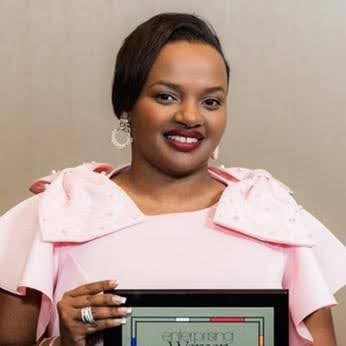
Diane Umutoni is the Co-Founder and Executive Director of Win Together Canada Foundation, a charitable organization dedicated to empowering families, especially young people, to thrive both emotionally and financially. Under her leadership, the foundation has supported many children and youth in discovering their full potential, giving them the confidence, skills, and mindset to succeed in life.
Diane is also the facilitator of “Take Your Idea to the Next Level,” a hands-on business training program delivered in partnership with Peace Through Business. The program helps aspiring women entrepreneurs move from ideas to action, offering practical tools and support along the way.
In 2025, Diane was recognized with an award from the Enterprising Women Foundation for her work in advancing women’s leadership and entrepreneurship. Alongside her professional work, Diane is a devoted mother to two daughters and a young son, balancing family and leadership with grace, strength, and love.