
Building With Purpose When Nobody Around Sees the Vision Yet

Building with Purpose

Have you ever tried to explain a vision that felt completely real to you, only to be met with silence?

You could see the possibilities clearly. You understood what it could become. You felt the responsibility of carrying it, even though there was no evidence, recognition, revenue, or external validation to prove that it would work.

Yet the people around you could not see it.

Some smiled politely. Others questioned whether the idea was realistic. A few may have encouraged you to choose something safer, smaller, or easier to understand. And somewhere between their silence and your uncertainty, you began to wonder:

Am I wrong?

Is the vision too big?

Am I the only person who can see this?

In “Building With Purpose When Nobody Around You Sees the Vision Yet,” Dr. Kim R. Grimes and Dr. Ana Everett explore what it takes to carry a purpose-driven vision through the quiet, unsupported stages of building. This conversation is for the person who knows there is something meaningful inside them but is struggling to continue because the people around them cannot yet understand it. It examines the loneliness of unsupported vision, the danger of depending entirely on external validation, the internal fuel required to keep building, and the moment when what once seemed invisible finally becomes undeniable.

The world may not understand what you are carrying today. But that does not make the vision unreal. It may simply mean that you are seeing something before everyone else is ready to recognize it. This episode unpacks what it takes to:

  • keep building when support is limited,
  • distinguish between wise discernment and destructive self-doubt,
  • protect a vision from criticism, silence, and premature exposure,
  • remain faithful during seasons when progress is invisible,
  • build from purpose rather than applause,
  • recognize when the world is beginning to catch up with what you already knew.

Meet Our Host

Building with Purpose: Host

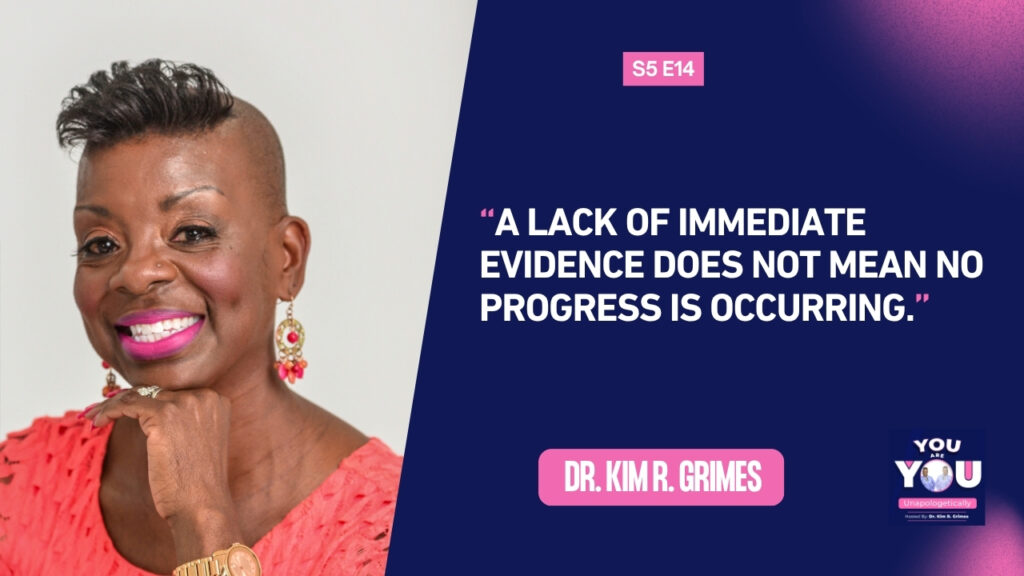
Dr. Kim R. Grimes is an emotional literacy coach, life-changing speaker, author, ordained minister, and host of You Are You, UnapologeticallyHer mission is to help people stop shrinking beneath pressure, reclaim their identities, and show up fully without apology. Through honest conversations, practical tools, and transformational guidance, Dr. Kim helps listeners recognize their value, live intentionally, and use their experiences to strengthen others.

Listen to the Podcast Here

Building with Purpose: Host Quote

In this episode, she gives language to an experience many purpose-driven leaders quietly carry: the loneliness of believing in something that has not yet become visible to anyone else.

“The silence of people who do not understand your calling can feel louder than any criticism.”

Dr. Kim reminds listeners that a lack of immediate recognition is not always evidence that something is wrong. Sometimes the people around you are not rejecting the vision. They simply do not possess the perspective, experience, or imagination required to see it yet. The challenge is learning not to use their inability to see as the measurement of your ability to build.

Why This Matters

Many meaningful visions are abandoned before they are ever given the opportunity to become real.

Not because the person carrying the vision lacked talent.

Not because the idea had no value.

Not because the work was impossible.

The vision was abandoned because the builder became exhausted from being the only person who believed.

There is a particular emotional weight attached to carrying something that no one else can see. You may spend months or years thinking, planning, sacrificing, learning, adjusting, and working while the people around you continue to ask when you will pursue something more practical.

During that season, silence can become dangerous.

Without encouragement, the mind begins creating its own explanations:

Maybe they are right.

Maybe I misunderstood the assignment.

Maybe I am not prepared.

Maybe the vision is too ambitious.

Maybe this is not the right time.

Those questions are not always evidence of weakness. Honest evaluation is an important part of leadership. Every vision must be tested, refined, researched, and developed.

But there is a difference between evaluating a vision and abandoning it because other people cannot understand it.

Some ideas need correction.

Some visions need clearer strategy.

Some plans require a different timeline.

But some visions are questioned simply because they are early.

The people around you may only be able to evaluate what currently exists. A visionary is often responding to what could exist.

That difference can create misunderstanding, loneliness, and doubt.

It can also become the place where purpose is strengthened.

Host Reflection: The Loneliness of Carrying What Others Cannot See

Vision often arrives before evidence.

You may understand the impact before there are measurable results. You may see the organization before there is a team. You may recognize the solution before anyone acknowledges the problem.

You may feel responsible for building something that remains completely invisible to everyone around you. That can be a lonely place. The people who care about you may not understand why you continue investing your energy into something that has not yet produced visible results. Their questions may come from concern rather than cruelty. They want to protect you from disappointment. They want you to choose certainty. They want evidence before they offer belief. But purpose does not always provide proof at the beginning. Sometimes it provides an assignment.

You are given enough clarity to take the next step, but not enough information to see the entire journey. You are asked to begin before you feel fully prepared. You are required to build capacity while carrying responsibility. This is where visionary loneliness can invite self-doubt.

When no one confirms what you see, you may begin questioning your own judgment. When progress moves slowly, you may interpret delay as denial. When the work remains invisible, you may assume it is insignificant. But invisible work is still work. Quiet progress is still progress. A foundation is valuable even when no one can see the structure it will eventually support. The early season of building is not meaningless simply because it is not impressive to other people.

It is often where the most important development occurs.

Your discipline is being tested.

Your motives are being clarified.

Your capacity is expanding.

Your strategy is being refined.

Your identity is being separated from applause.

You are learning whether you are committed to the purpose or merely attracted to the recognition that may eventually accompany it.

Meet the Guest: Dr. Ana Everett

Building with Purpose: Guest

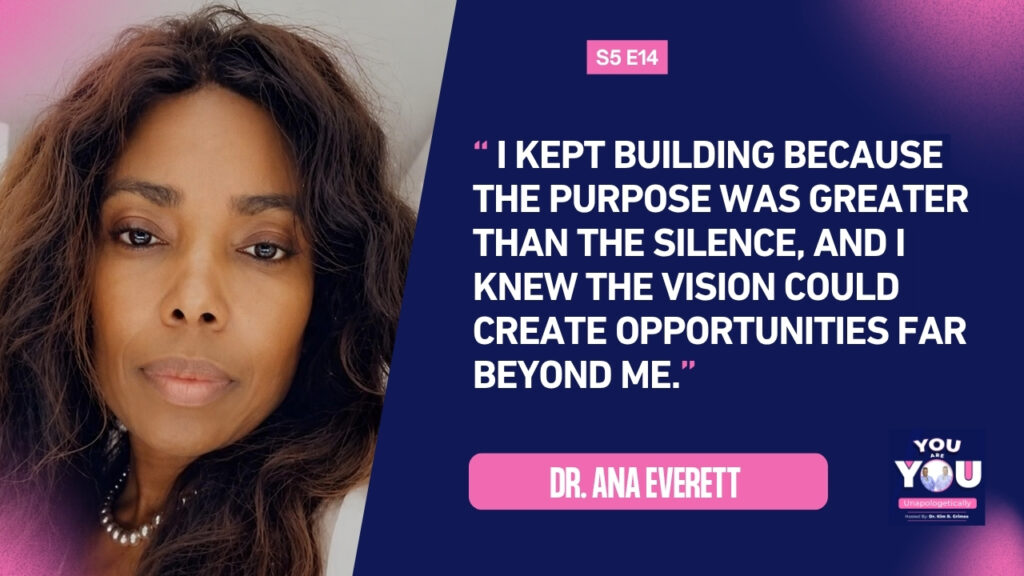
Dr. Ana Everett is a serial social entrepreneur, fintech executive, and global business leader committed to advancing financial inclusion, food security, and economic empowerment for underserved communities. She is the founder and CEO of SolutionsAe, Inc., a women- and minority-owned HUBZone enterprise operating across several sectors, including fintech, remittance and foreign exchange services, construction, logistics, hospitality, and community development.

Dr. Everett built SolutionsAe into a multi-vertical enterprise spanning three countries and generating more than $5 million in revenue. Her work demonstrates what can happen when a leader continues building from purpose before the results are visible to everyone else. Her leadership brings together business strategy, technology, faith-based partnerships, and social impact.

Through the GoodForUs Platform, she has helped develop financial inclusion solutions intended to reduce barriers to banking, remittance services, and cross-border commerce. Her work has extended across the United States, Africa, Ethiopia, and the United Arab Emirates, where she has cultivated relationships with financial institutions, governments, churches, humanitarian organizations, and community partners.

Dr. Everett is also committed to workforce development, women in technology, entrepreneurship education, and sustainable economic growth. Through initiatives such as SAE She Codes and the GoodForUs Fellowship, she continues creating pathways through which other people can access education, innovation, and economic opportunity. She is a mother of eight and grandmother of fourteen. Her commitment to generational impact is deeply connected to her experiences of motherhood, faith, leadership, perseverance, and building beyond the limitations others attempted to place around her beginning. Her journey reflects a central truth of this episode:

The world does not have to understand the vision before you begin honoring it.

What We Unpack in This Episode

1. Before the Vision Became Visible

Every established organization, influential platform, successful initiative, and transformative movement once existed only as an idea.

Before the recognition, there was imagination.

Before the revenue, there was risk.

Before the team, there was often one person carrying responsibility.

Before anyone else believed, the builder had to decide whether the vision was worth pursuing without external confirmation.

In this conversation, Dr. Ana is invited to return to the beginning—before SolutionsAe became a multi-vertical enterprise and before the results could speak on her behalf.

What was she carrying internally that she could not ignore?

What possibility could she see before the people around her understood it?

And what made the vision feel too important to abandon?

There are some ideas you can release without regret.

But purpose-driven vision often behaves differently.

It continues returning.

It interrupts your comfort.

It follows you into quiet moments.

It asks you to pay attention.

You may attempt to dismiss it because the timing seems inconvenient or the resources appear insufficient. Yet the vision remains.

The inability to ignore it does not automatically guarantee that every detail is correct. However, it may be an invitation to investigate, prepare, and begin.

The first act of purpose is not always launching publicly.

Sometimes it is simply admitting that the vision is real.

2. The Loneliness of Unsupported Vision

There is a specific loneliness that accompanies a vision larger than your current environment.

It does not always mean that the people around you are against you.

They may love you deeply.

They may want you to succeed.

They may simply be unable to imagine what you can see.

That gap between your internal clarity and their external uncertainty can become emotionally exhausting.

You may explain the vision repeatedly, hoping that the right words will finally make someone understand. When they still do not see it, you may feel isolated, misunderstood, or unsupported.

Eventually, you may stop talking about it. This silence can protect the vision, but it can also intensify loneliness. The danger appears when you begin confusing the absence of support with confirmation that you are wrong.

They are not the same. Lack of support may mean the vision needs stronger communication.

It may mean you need different counsel. It may reveal that the people currently surrounding you are not the people equipped to help build the next stage.

It may also mean that the vision is still in a developmental season and should not yet be exposed to every opinion.

Not everyone should have access to something while it is still becoming.

A fragile idea can be damaged by careless criticism, premature judgment, or advice from people who have never attempted to build anything similar.

Discernment requires learning whose questions can sharpen the vision and whose doubts will only drain your courage.

3. The Fuel That Keeps a Purpose-Driven Builder Moving

Building with Purpose: Guest Quote
  • People change.
  • Attention shifts.
  • Support may disappear.
  • Recognition may arrive late.

If your commitment depends entirely on praise, your progress will remain vulnerable to other people’s reactions. Purpose-driven builders eventually develop a deeper source of motivation. They become connected to the reason behind the work. They understand who the vision is intended to serve. They recognize what may remain unresolved if they refuse to build. They continue not because every day feels exciting, but because the purpose has become non-negotiable.

As Dr. Kim reflects:

“The vision itself becomes the energy source. You are not waiting to be motivated. You are motivated because you cannot afford not to be.”

This does not mean you will never feel tired. Purpose does not eliminate exhaustion. It does not prevent disappointment. It does not remove the need for rest, planning, support, or financial wisdom.

Purpose gives the struggle context. It reminds you why the work matters when the work becomes difficult. The fuel may come from faith. It may come from responsibility. It may come from a personal experience that revealed a problem you can no longer ignore.

It may come from knowing that other people will gain access, opportunity, safety, education, or hope because you chose to continue.

Whatever the source, it must be strong enough to carry you through seasons when applause is absent.

4. Protecting the Vision From Doubt, Criticism, and Silence

A vision must be protected, but protection does not mean avoiding all feedback. Healthy protection involves learning how to separate useful information from destructive noise.

Constructive feedback asks:

  • Is the strategy sustainable?
  • Does the solution address a genuine need?
  • What resources are required?
  • Who is the intended audience?
  • What risks should be considered?
  • What evidence would help strengthen the model?

Destructive doubt sounds different:

  • Nobody will support this.
  • You are not the kind of person who can build that.
  • People like us do not enter that industry.
  • You should choose something easier.
  • It has not happened yet, so it probably never will.

One form of feedback improves the work.

The other attempts to reduce the builder.

A mature visionary must be humble enough to revise the plan without surrendering the purpose.

The method may change.

The timeline may change.

The team may change.

The original business model may require a pivot.

But refinement is not failure.

A pivot does not mean the vision was false. It may mean you have gained enough knowledge to build it more effectively. The goal is not to become emotionally attached to every early detail. The goal is to remain faithful to the deeper assignment while allowing the strategy to evolve.

5. When the World Finally Begins to See It

There is a moment many visionaries eventually experience. The work that was once questioned begins producing results. The idea that once required long explanations becomes easier for people to understand. The organization gains traction. The partnerships begin forming. The revenue grows. The impact becomes measurable. The same people who once looked confused may begin describing the vision as obvious. But it was not obvious in the beginning. Someone had to carry it before the evidence arrived. Someone had to continue when the silence was loud. Someone had to work through obscurity, limited resources, uncertainty, and doubt. Recognition often celebrates the visible outcome without acknowledging the invisible years that produced it.

That is why a builder must understand that public recognition is not the beginning of success. The beginning may have occurred years earlier when you made a private decision not to abandon the vision. When the world finally sees what you have been carrying, the moment can bring relief, gratitude, and confirmation. It can also reveal how much you have changed.

By the time the recognition arrives, you may no longer be the person who needed it in order to continue. The journey has already taught you how to work without applause.

6. What Building in Faith Teaches You About Yourself

The most important lessons are not always learned after the breakthrough. They are often learned during the quiet years before it. Building before the world is ready reveals your relationship with uncertainty. It shows whether you can remain disciplined without immediate results. It exposes your need for approval. It tests whether your identity is connected to your assignment or to other people’s reactions. It teaches you to make decisions with incomplete information. It forces you to distinguish between persistence and stubbornness. It requires you to develop emotional resilience, practical wisdom, and spiritual grounding.

You discover that courage is not the absence of doubt. Courage is the decision to keep taking responsible steps while doubt is present. You learn that faith is not passive optimism.

Faithful building requires action. It requires research, preparation, budgeting, relationship-building, problem-solving, and the willingness to adjust. You also learn that the vision may be developing you while you are attempting to develop it.

The person you were at the beginning may not have possessed the capacity required to carry the full expression of the assignment. The quiet years were not wasted. They were preparing the builder for what was being built.

7. Building Something Larger Than Personal Recognition

  • Purpose-driven vision rarely ends with the person who first carries it.
  • The organization may create employment.
  • The platform may improve access.
  • The program may educate future leaders.
  • The business may solve a problem affecting underserved communities.
  • The innovation may become a bridge between resources and the people who need them.

Dr. Everett’s work across fintech, remittance services, education, workforce development, food security, and community empowerment reflects this broader understanding of purpose. The goal is not simply to prove that the doubters were wrong. The goal is to create something that matters. When the desire for vindication becomes stronger than the desire for impact, the vision can become distorted. Purpose asks a more meaningful question: Who will be served because I continued building? That question can sustain you during difficult seasons. It moves your attention away from the people who failed to understand and toward the people who may eventually benefit.

Key Takeaways

Building with Purpose: Blog Host Take Away Quote
  • The silence of people who cannot see your calling is not automatic confirmation that you are wrong.
  • External encouragement is valuable, but the fuel sustaining your work must be rooted in something deeper than applause.
  • Unsupported seasons can clarify your motives, strengthen your discipline, and prepare you for the responsibility that accompanies visibility.
  • A lack of immediate evidence does not mean no progress is occurring.
  • You can receive wise feedback without allowing other people’s limited imagination to become the boundary of your capacity.
  • Protecting the vision does not mean rejecting accountability. It means choosing counsel carefully.
  • The strategy may need to change without requiring you to abandon the purpose.
  • The world may eventually recognize what you were carrying, but you must decide whether the work is worth doing before that recognition arrives.
  • Purpose becomes powerful when the vision is connected to the people, communities, and future possibilities it can serve.

Action Steps for Purpose-Driven Builders

1. Write the vision down

Move the idea out of your mind and place it somewhere you can examine it clearly.

Describe:

  • what you want to build,
  • who it will serve,
  • what problem it addresses,
  • why the problem matters,
  • what the first version could realistically look like.

Writing creates clarity.

You cannot properly develop what you are unwilling to define.

2. Separate the purpose from the method

Identify the core purpose beneath the vision.

Then examine whether you have become overly attached to one method of achieving it.

Your assignment may remain valid even if the original strategy needs to change.

3. Identify trustworthy voices

Choose one or two people capable of offering grounded, constructive guidance.

Do not look only for people who will agree with you. Look for people who can help you think more clearly without making you feel ashamed for thinking boldly.

4. Define the next responsible step

You do not need to build the entire vision today.

Identify one action you can complete this week.

It may involve research, registration, budgeting, prototyping, writing, calling a potential partner, studying the market, or speaking with someone who understands the industry.

Movement builds evidence.

5. Examine your relationship with validation

Ask yourself:

Would I still believe this work matters if nobody praised me for doing it?

Be honest about how much of your energy depends on being seen.

Then reconnect with the people or purpose the vision is intended to serve.

6. Create a record of progress

Document small wins, lessons, feedback, completed tasks, new relationships, and meaningful breakthroughs.

During difficult seasons, this record will remind you that the work is moving even when progress feels slow.

7. Make a personal declaration

Say this aloud:

“I do not need everyone to see it yet. I just need to keep building.”

The vision was given to you—not to the room.

And the building is yours to do.

Final Reflection

In a world that rewards what is already visible, proven, and widely accepted, it takes courage to build something that exists only as possibility.

But every meaningful creation begins there.

Before the world recognizes the vision, someone must carry it.

Before the results become undeniable, someone must work through uncertainty.

Before the room applauds, someone must continue during the silence.

The vision inside you—the one that continues returning, challenging, and calling you forward—may not be an accident.

It may be an assignment.

Do not allow the absence of immediate recognition to make the decision for you.

Test the vision.

Develop the strategy.

Seek wise counsel.

Protect your faith.

Build responsibly.

Rest when necessary.

Pivot when wisdom requires it.

But do not abandon something meaningful merely because the people around you cannot see it yet.

Keep building.

Keep carrying it.

Keep being faithfully, boldly, and unapologetically you.

Building with Purpose

Have you ever tried to explain a vision that felt completely real to you, only to be met with silence?

You could see the possibilities clearly. You understood what it could become. You felt the responsibility of carrying it, even though there was no evidence, recognition, revenue, or external validation to prove that it would work.

Yet the people around you could not see it.

Some smiled politely. Others questioned whether the idea was realistic. A few may have encouraged you to choose something safer, smaller, or easier to understand. And somewhere between their silence and your uncertainty, you began to wonder:

Am I wrong?

Is the vision too big?

Am I the only person who can see this?

In “Building With Purpose When Nobody Around You Sees the Vision Yet,” Dr. Kim R. Grimes and Dr. Ana Everett explore what it takes to carry a purpose-driven vision through the quiet, unsupported stages of building. This conversation is for the person who knows there is something meaningful inside them but is struggling to continue because the people around them cannot yet understand it. It examines the loneliness of unsupported vision, the danger of depending entirely on external validation, the internal fuel required to keep building, and the moment when what once seemed invisible finally becomes undeniable.

The world may not understand what you are carrying today. But that does not make the vision unreal. It may simply mean that you are seeing something before everyone else is ready to recognize it. This episode unpacks what it takes to:

  • keep building when support is limited,
  • distinguish between wise discernment and destructive self-doubt,
  • protect a vision from criticism, silence, and premature exposure,
  • remain faithful during seasons when progress is invisible,
  • build from purpose rather than applause,
  • recognize when the world is beginning to catch up with what you already knew.

Meet Our Host

Building with Purpose: Host

Dr. Kim R. Grimes is an emotional literacy coach, life-changing speaker, author, ordained minister, and host of You Are You, UnapologeticallyHer mission is to help people stop shrinking beneath pressure, reclaim their identities, and show up fully without apology. Through honest conversations, practical tools, and transformational guidance, Dr. Kim helps listeners recognize their value, live intentionally, and use their experiences to strengthen others.

View The Episode Here

Listen to the Episode Here

Building with Purpose: Host Quote

In this episode, she gives language to an experience many purpose-driven leaders quietly carry: the loneliness of believing in something that has not yet become visible to anyone else.

“The silence of people who do not understand your calling can feel louder than any criticism.”

Dr. Kim reminds listeners that a lack of immediate recognition is not always evidence that something is wrong. Sometimes the people around you are not rejecting the vision. They simply do not possess the perspective, experience, or imagination required to see it yet. The challenge is learning not to use their inability to see as the measurement of your ability to build.

Why This Matters

Many meaningful visions are abandoned before they are ever given the opportunity to become real.

Not because the person carrying the vision lacked talent.

Not because the idea had no value.

Not because the work was impossible.

The vision was abandoned because the builder became exhausted from being the only person who believed.

There is a particular emotional weight attached to carrying something that no one else can see. You may spend months or years thinking, planning, sacrificing, learning, adjusting, and working while the people around you continue to ask when you will pursue something more practical.

During that season, silence can become dangerous.

Without encouragement, the mind begins creating its own explanations:

Maybe they are right.

Maybe I misunderstood the assignment.

Maybe I am not prepared.

Maybe the vision is too ambitious.

Maybe this is not the right time.

Those questions are not always evidence of weakness. Honest evaluation is an important part of leadership. Every vision must be tested, refined, researched, and developed.

But there is a difference between evaluating a vision and abandoning it because other people cannot understand it.

Some ideas need correction.

Some visions need clearer strategy.

Some plans require a different timeline.

But some visions are questioned simply because they are early.

The people around you may only be able to evaluate what currently exists. A visionary is often responding to what could exist.

That difference can create misunderstanding, loneliness, and doubt.

It can also become the place where purpose is strengthened.

Host Reflection: The Loneliness of Carrying What Others Cannot See

Vision often arrives before evidence.

You may understand the impact before there are measurable results. You may see the organization before there is a team. You may recognize the solution before anyone acknowledges the problem.

You may feel responsible for building something that remains completely invisible to everyone around you. That can be a lonely place. The people who care about you may not understand why you continue investing your energy into something that has not yet produced visible results. Their questions may come from concern rather than cruelty. They want to protect you from disappointment. They want you to choose certainty. They want evidence before they offer belief. But purpose does not always provide proof at the beginning. Sometimes it provides an assignment.

You are given enough clarity to take the next step, but not enough information to see the entire journey. You are asked to begin before you feel fully prepared. You are required to build capacity while carrying responsibility. This is where visionary loneliness can invite self-doubt.

When no one confirms what you see, you may begin questioning your own judgment. When progress moves slowly, you may interpret delay as denial. When the work remains invisible, you may assume it is insignificant. But invisible work is still work. Quiet progress is still progress. A foundation is valuable even when no one can see the structure it will eventually support. The early season of building is not meaningless simply because it is not impressive to other people.

It is often where the most important development occurs.

Your discipline is being tested.

Your motives are being clarified.

Your capacity is expanding.

Your strategy is being refined.

Your identity is being separated from applause.

You are learning whether you are committed to the purpose or merely attracted to the recognition that may eventually accompany it.

Meet the Guest: Dr. Ana Everett

Building with Purpose: Guest

Dr. Ana Everett is a serial social entrepreneur, fintech executive, and global business leader committed to advancing financial inclusion, food security, and economic empowerment for underserved communities. She is the founder and CEO of SolutionsAe, Inc., a women- and minority-owned HUBZone enterprise operating across several sectors, including fintech, remittance and foreign exchange services, construction, logistics, hospitality, and community development.

Dr. Everett built SolutionsAe into a multi-vertical enterprise spanning three countries and generating more than $5 million in revenue. Her work demonstrates what can happen when a leader continues building from purpose before the results are visible to everyone else. Her leadership brings together business strategy, technology, faith-based partnerships, and social impact.

Through the GoodForUs Platform, she has helped develop financial inclusion solutions intended to reduce barriers to banking, remittance services, and cross-border commerce. Her work has extended across the United States, Africa, Ethiopia, and the United Arab Emirates, where she has cultivated relationships with financial institutions, governments, churches, humanitarian organizations, and community partners.

Dr. Everett is also committed to workforce development, women in technology, entrepreneurship education, and sustainable economic growth. Through initiatives such as SAE She Codes and the GoodForUs Fellowship, she continues creating pathways through which other people can access education, innovation, and economic opportunity. She is a mother of eight and grandmother of fourteen. Her commitment to generational impact is deeply connected to her experiences of motherhood, faith, leadership, perseverance, and building beyond the limitations others attempted to place around her beginning. Her journey reflects a central truth of this episode:

The world does not have to understand the vision before you begin honoring it.

What We Unpack in This Episode

1. Before the Vision Became Visible

Every established organization, influential platform, successful initiative, and transformative movement once existed only as an idea.

Before the recognition, there was imagination.

Before the revenue, there was risk.

Before the team, there was often one person carrying responsibility.

Before anyone else believed, the builder had to decide whether the vision was worth pursuing without external confirmation.

In this conversation, Dr. Ana is invited to return to the beginning—before SolutionsAe became a multi-vertical enterprise and before the results could speak on her behalf.

What was she carrying internally that she could not ignore?

What possibility could she see before the people around her understood it?

And what made the vision feel too important to abandon?

There are some ideas you can release without regret.

But purpose-driven vision often behaves differently.

It continues returning.

It interrupts your comfort.

It follows you into quiet moments.

It asks you to pay attention.

You may attempt to dismiss it because the timing seems inconvenient or the resources appear insufficient. Yet the vision remains.

The inability to ignore it does not automatically guarantee that every detail is correct. However, it may be an invitation to investigate, prepare, and begin.

The first act of purpose is not always launching publicly.

Sometimes it is simply admitting that the vision is real.

2. The Loneliness of Unsupported Vision

There is a specific loneliness that accompanies a vision larger than your current environment.

It does not always mean that the people around you are against you.

They may love you deeply.

They may want you to succeed.

They may simply be unable to imagine what you can see.

That gap between your internal clarity and their external uncertainty can become emotionally exhausting.

You may explain the vision repeatedly, hoping that the right words will finally make someone understand. When they still do not see it, you may feel isolated, misunderstood, or unsupported.

Eventually, you may stop talking about it. This silence can protect the vision, but it can also intensify loneliness. The danger appears when you begin confusing the absence of support with confirmation that you are wrong.

They are not the same. Lack of support may mean the vision needs stronger communication.

It may mean you need different counsel. It may reveal that the people currently surrounding you are not the people equipped to help build the next stage.

It may also mean that the vision is still in a developmental season and should not yet be exposed to every opinion.

Not everyone should have access to something while it is still becoming.

A fragile idea can be damaged by careless criticism, premature judgment, or advice from people who have never attempted to build anything similar.

Discernment requires learning whose questions can sharpen the vision and whose doubts will only drain your courage.

3. The Fuel That Keeps a Purpose-Driven Builder Moving
Building with Purpose: Guest Quote
  • People change.
  • Attention shifts.
  • Support may disappear.
  • Recognition may arrive late.

If your commitment depends entirely on praise, your progress will remain vulnerable to other people’s reactions. Purpose-driven builders eventually develop a deeper source of motivation. They become connected to the reason behind the work. They understand who the vision is intended to serve. They recognize what may remain unresolved if they refuse to build. They continue not because every day feels exciting, but because the purpose has become non-negotiable.

As Dr. Kim reflects:

“The vision itself becomes the energy source. You are not waiting to be motivated. You are motivated because you cannot afford not to be.”

This does not mean you will never feel tired. Purpose does not eliminate exhaustion. It does not prevent disappointment. It does not remove the need for rest, planning, support, or financial wisdom.

Purpose gives the struggle context. It reminds you why the work matters when the work becomes difficult. The fuel may come from faith. It may come from responsibility. It may come from a personal experience that revealed a problem you can no longer ignore.

It may come from knowing that other people will gain access, opportunity, safety, education, or hope because you chose to continue.

Whatever the source, it must be strong enough to carry you through seasons when applause is absent.

4. Protecting the Vision From Doubt, Criticism, and Silence

A vision must be protected, but protection does not mean avoiding all feedback. Healthy protection involves learning how to separate useful information from destructive noise.

Constructive feedback asks:

  • Is the strategy sustainable?
  • Does the solution address a genuine need?
  • What resources are required?
  • Who is the intended audience?
  • What risks should be considered?
  • What evidence would help strengthen the model?

Destructive doubt sounds different:

  • Nobody will support this.
  • You are not the kind of person who can build that.
  • People like us do not enter that industry.
  • You should choose something easier.
  • It has not happened yet, so it probably never will.

One form of feedback improves the work.

The other attempts to reduce the builder.

A mature visionary must be humble enough to revise the plan without surrendering the purpose.

The method may change.

The timeline may change.

The team may change.

The original business model may require a pivot.

But refinement is not failure.

A pivot does not mean the vision was false. It may mean you have gained enough knowledge to build it more effectively. The goal is not to become emotionally attached to every early detail. The goal is to remain faithful to the deeper assignment while allowing the strategy to evolve.

5. When the World Finally Begins to See It

There is a moment many visionaries eventually experience. The work that was once questioned begins producing results. The idea that once required long explanations becomes easier for people to understand. The organization gains traction. The partnerships begin forming. The revenue grows. The impact becomes measurable. The same people who once looked confused may begin describing the vision as obvious. But it was not obvious in the beginning. Someone had to carry it before the evidence arrived. Someone had to continue when the silence was loud. Someone had to work through obscurity, limited resources, uncertainty, and doubt. Recognition often celebrates the visible outcome without acknowledging the invisible years that produced it.

That is why a builder must understand that public recognition is not the beginning of success. The beginning may have occurred years earlier when you made a private decision not to abandon the vision. When the world finally sees what you have been carrying, the moment can bring relief, gratitude, and confirmation. It can also reveal how much you have changed.

By the time the recognition arrives, you may no longer be the person who needed it in order to continue. The journey has already taught you how to work without applause.

6. What Building in Faith Teaches You About Yourself

The most important lessons are not always learned after the breakthrough. They are often learned during the quiet years before it. Building before the world is ready reveals your relationship with uncertainty. It shows whether you can remain disciplined without immediate results. It exposes your need for approval. It tests whether your identity is connected to your assignment or to other people’s reactions. It teaches you to make decisions with incomplete information. It forces you to distinguish between persistence and stubbornness. It requires you to develop emotional resilience, practical wisdom, and spiritual grounding.

You discover that courage is not the absence of doubt. Courage is the decision to keep taking responsible steps while doubt is present. You learn that faith is not passive optimism.

Faithful building requires action. It requires research, preparation, budgeting, relationship-building, problem-solving, and the willingness to adjust. You also learn that the vision may be developing you while you are attempting to develop it.

The person you were at the beginning may not have possessed the capacity required to carry the full expression of the assignment. The quiet years were not wasted. They were preparing the builder for what was being built.

7. Building Something Larger Than Personal Recognition

  • Purpose-driven vision rarely ends with the person who first carries it.
  • The organization may create employment.
  • The platform may improve access.
  • The program may educate future leaders.
  • The business may solve a problem affecting underserved communities.
  • The innovation may become a bridge between resources and the people who need them.

Dr. Everett’s work across fintech, remittance services, education, workforce development, food security, and community empowerment reflects this broader understanding of purpose. The goal is not simply to prove that the doubters were wrong. The goal is to create something that matters. When the desire for vindication becomes stronger than the desire for impact, the vision can become distorted. Purpose asks a more meaningful question: Who will be served because I continued building? That question can sustain you during difficult seasons. It moves your attention away from the people who failed to understand and toward the people who may eventually benefit.

Key Takeaways
Building with Purpose: Blog Host Take Away Quote
  • The silence of people who cannot see your calling is not automatic confirmation that you are wrong.
  • External encouragement is valuable, but the fuel sustaining your work must be rooted in something deeper than applause.
  • Unsupported seasons can clarify your motives, strengthen your discipline, and prepare you for the responsibility that accompanies visibility.
  • A lack of immediate evidence does not mean no progress is occurring.
  • You can receive wise feedback without allowing other people’s limited imagination to become the boundary of your capacity.
  • Protecting the vision does not mean rejecting accountability. It means choosing counsel carefully.
  • The strategy may need to change without requiring you to abandon the purpose.
  • The world may eventually recognize what you were carrying, but you must decide whether the work is worth doing before that recognition arrives.
  • Purpose becomes powerful when the vision is connected to the people, communities, and future possibilities it can serve.

Action Steps for Purpose-Driven Builders

1. Write the vision down

Move the idea out of your mind and place it somewhere you can examine it clearly.

Describe:

  • what you want to build,
  • who it will serve,
  • what problem it addresses,
  • why the problem matters,
  • what the first version could realistically look like.

Writing creates clarity.

You cannot properly develop what you are unwilling to define.

2. Separate the purpose from the method

Identify the core purpose beneath the vision.

Then examine whether you have become overly attached to one method of achieving it.

Your assignment may remain valid even if the original strategy needs to change.

3. Identify trustworthy voices

Choose one or two people capable of offering grounded, constructive guidance.

Do not look only for people who will agree with you. Look for people who can help you think more clearly without making you feel ashamed for thinking boldly.

4. Define the next responsible step

You do not need to build the entire vision today.

Identify one action you can complete this week.

It may involve research, registration, budgeting, prototyping, writing, calling a potential partner, studying the market, or speaking with someone who understands the industry.

Movement builds evidence.

5. Examine your relationship with validation

Ask yourself:

Would I still believe this work matters if nobody praised me for doing it?

Be honest about how much of your energy depends on being seen.

Then reconnect with the people or purpose the vision is intended to serve.

6. Create a record of progress

Document small wins, lessons, feedback, completed tasks, new relationships, and meaningful breakthroughs.

During difficult seasons, this record will remind you that the work is moving even when progress feels slow.

7. Make a personal declaration

Say this aloud:

“I do not need everyone to see it yet. I just need to keep building.”

The vision was given to you—not to the room.

And the building is yours to do.

Final Reflection

In a world that rewards what is already visible, proven, and widely accepted, it takes courage to build something that exists only as possibility.

But every meaningful creation begins there.

Before the world recognizes the vision, someone must carry it.

Before the results become undeniable, someone must work through uncertainty.

Before the room applauds, someone must continue during the silence.

The vision inside you—the one that continues returning, challenging, and calling you forward—may not be an accident.

It may be an assignment.

Do not allow the absence of immediate recognition to make the decision for you.

Test the vision.

Develop the strategy.

Seek wise counsel.

Protect your faith.

Build responsibly.

Rest when necessary.

Pivot when wisdom requires it.

But do not abandon something meaningful merely because the people around you cannot see it yet.

Keep building.

Keep carrying it.

Keep being faithfully, boldly, and unapologetically you.

Leave a Comment

Your email address will not be published. Required fields are marked *

Scroll to Top