
There is a particular ache that comes from being asked, “Where are you from?” when no single answer feels complete.
Maybe you moved so often that home became a temporary word. Maybe you grew up between countries, cultures, languages, or communities. Maybe you stayed in one place physically, yet life changed so much around you that you still had to rebuild your understanding of who you were.
When you have never felt fully rooted in one place, it is easy to wonder whether something is missing from you. But what if your identity was never supposed to depend on an address? What if home is not only somewhere you find, but something you learn to carry within yourself?
In this episode of You Are You, Unapologetically, we explore a liberating truth: you do not need roots in a place to know who you are.
Episode Overview
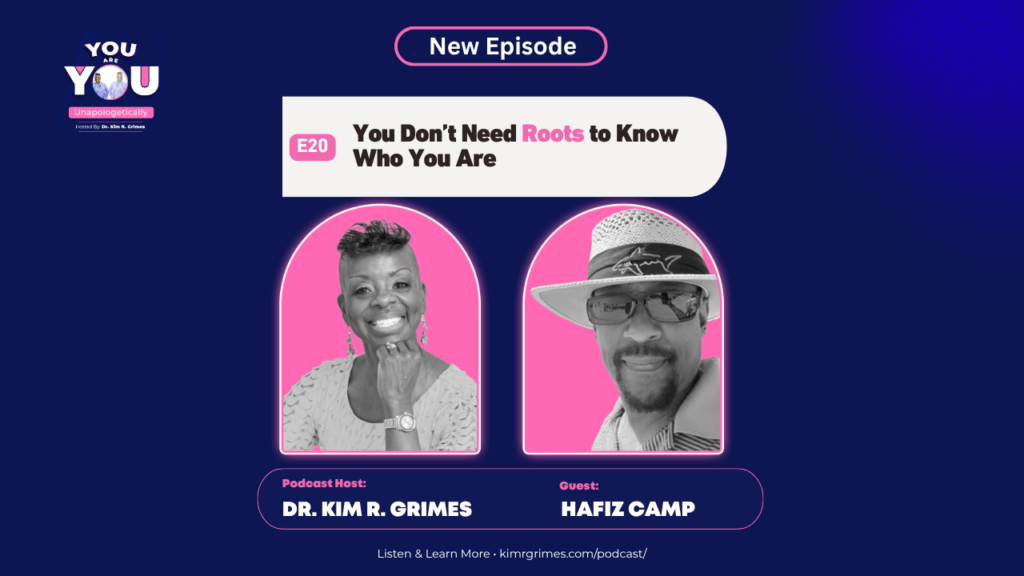
“You Don’t Need Roots to Know Who You Are” is a conversation about identity, belonging, resilience, and the inner strength required to remain yourself while everything around you changes.
Dr. Kim R. Grimes is joined by Hafiz Camp, whose life has crossed countries, cultures, military service, family leadership, authorship, and community work with refugee families. Together, they examine what happens when identity cannot be anchored to one hometown, one culture, or one familiar community.
This episode challenges the belief that belonging must come before identity. Instead, it invites us to build a steady sense of self from the inside out—to recognize that our experiences may shape us, but they do not have the final authority to define us.
Meet Our Host
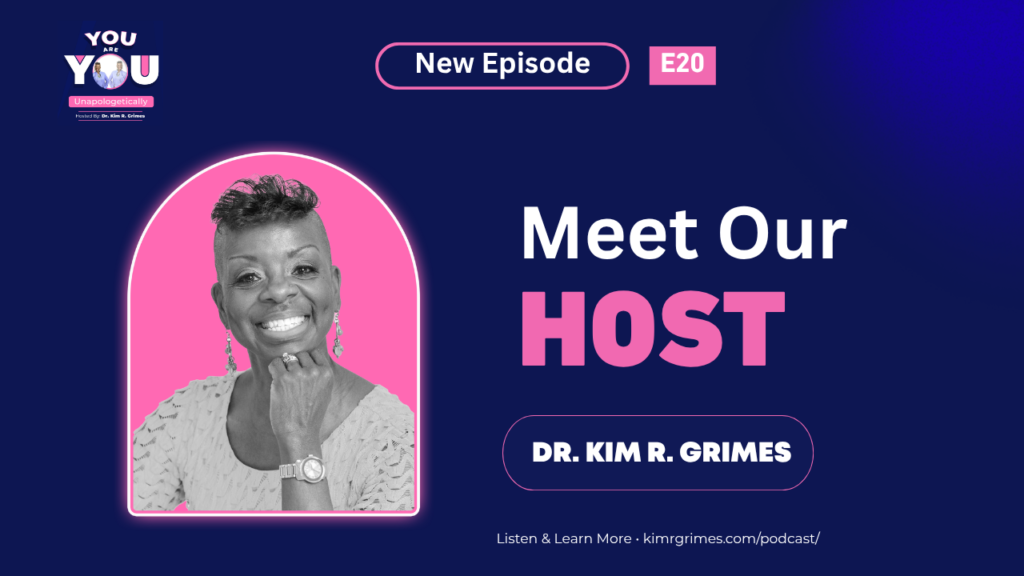
Dr. Kim R. Grimes is an emotional literacy coach, life-changing speaker, author, ordained minister, and the host of You Are You, Unapologetically. Her mission is to help people stop shrinking under pressure, reclaim their identity, and show up fully, without apology.
Through honest conversations, practical tools, and mindset-shifting guidance, Dr. Kim empowers listeners to uncover their greatness, live abundantly, and pursue purpose with confidence. Her message is shaped by lived resilience, including a transformative season of loss and rebuilding that deepened her passion to serve others—especially young people—through faith, emotional growth, and personal development.
Why This Matters
We live in a world that likes simple labels. People want one hometown, one culture, one title, one answer that explains who you are. Yet real lives are often more complicated.
Women may lose themselves beneath expectations about who they should be. Leaders may become so identified with a position that they struggle when the role changes. Entrepreneurs may confuse the success or failure of a business with their personal worth. Parents may work hard to give their children stability while quietly wondering whether they have lost touch with themselves. Immigrants, military families, refugees, and people raised between cultures may feel pressured to choose one part of their story over another.
That is why this conversation matters. When identity depends entirely on a place, role, relationship, or season, every change can feel like a personal collapse. But when you know what you value, what you believe, and who you are becoming, you can enter unfamiliar rooms without abandoning yourself.
Being internally rooted does not mean you never feel lonely or uncertain. It means uncertainty no longer gets to name you. It means you can honor every place that shaped you without requiring any one place to complete you.
Host Reflection
There are seasons when life removes the things we thought were holding us together. A relationship changes. A familiar role ends. A plan falls apart. A place that once felt safe no longer feels like home. In those moments, we may ask, “Who am I now?”
“You can walk into unfamiliar territory without becoming unfamiliar to yourself. Your identity was never waiting for you in a place; it has been growing within you all along.” — Dr. Kim R. Grimes Share on XI have learned that rebuilding is not proof that you have failed. Sometimes rebuilding is how you meet the truest version of yourself.
Faith has taught me that my identity cannot rest only in circumstances, because circumstances move. It must be anchored in what God placed within me: my worth, my gifts, my capacity to love, my responsibility to grow, and my courage to keep showing up. Healing begins when we stop asking the outside world to confirm what we must first be willing to believe within.
You can grieve what changed and still trust what is being formed. You can miss where you were and remain open to where purpose is leading you. You can walk into unfamiliar territory without becoming unfamiliar to yourself.
Showing up unapologetically is not about having every answer. It is about refusing to abandon yourself while you discover them.
Meet the Guest

Hafiz Camp is a United States Marine Corps veteran, published author, and community leader based in Tampa, Florida. Born in Verdun, France, into a military family, he gained a global perspective through extensive travel during childhood. His family later settled in Newport News, Virginia, where he completed secondary school before earning a degree in Sociology from Virginia State University.
Motivated by his interest in human dynamics, his desire to connect across cultures, and his father’s example of military service, Hafiz joined the United States Marine Corps. His service expanded his opportunities for travel, leadership, and meaningful cross-cultural relationships.
Hafiz is the author of two books and is working on a third. He has also raised five children and four grandchildren, sharing with them his love of exploring the world. Since 2016, he has supported refugee families in the Tampa area, including families from Syria and the Central African Republic. His commitment to people also shows up through volunteering and relationship-building. In his personal time, he enjoys archery, golf, and travel.
His voice matters in this episode because his understanding of identity is not theoretical. It has been shaped by movement, service, parenthood, cultural connection, and years of helping others rebuild.
“A life lived across places and cultures can teach you that belonging is not confined to geography; it grows through connection, service, and the values you carry wherever you go.” — Hafiz Camp’s Share on XWhat We Unpack in This Episode
1. Belonging to Yourself Before a Place
Many people wait for the right city, community, or relationship to make them feel whole. This conversation turns that idea around: identity comes first. The world does not get to decide whether you are worthy of belonging to yourself.
2. Holding Freedom and Loneliness Together
A life shaped by movement can bring freedom, adaptability, and a broad view of humanity. It can also bring loneliness. Emotional maturity allows both truths to exist without forcing one to erase the other.
3. Rebuilding After Everything Changes
Hafiz’s work with refugee families opens a deeper conversation about resilience. Rebuilding is not limited to people who have lost a country or a physical home. At some point, nearly all of us must rebuild a dream, a relationship, a belief, or a former version of ourselves.
4. Raising Children With an Inner Foundation
Parents cannot guarantee that the world beneath their children will always remain steady. They can, however, help children understand their values, recognize their worth, embrace their story, and develop the confidence to carry themselves through change.
5. Identity Beyond Geography
The places we come from matter, but they are not the whole story. Identity also grows through choices, values, faith, relationships, lessons, service, and the person we decide to become.
6. The Courage to Stop Searching Outside Yourself
External validation may feel comforting, but it cannot build a lasting identity. The episode invites listeners to stop searching in titles, approval, and locations for what must be recognized and nurtured within.
Key Takeaways
- You do not need a fixed place to know who you are. Your history informs you, but your address does not define you.
- You already have permission to belong to yourself. You do not have to wait for a group, role, or environment to validate your identity.
- Freedom and loneliness can coexist. Holding both honestly is a sign of strength, not contradiction.
- Rebuilding is deeply human. Starting again does not erase who you were; it can reveal who you are becoming.
- Inner roots create stability. Values, faith, self-awareness, and purpose can steady you when circumstances shift.
- Children need identity, not just familiarity. A strong internal foundation equips them to navigate a changing world.
- Authenticity travels with you. You can enter a new culture, city, season, or room without leaving yourself behind.
Action Steps for This Week
- Name what has remained true. Write down three qualities, values, or beliefs that have stayed with you across different seasons and environments. Let them remind you of your real foundation.
- Notice where you are waiting for permission. Identify one way you have delayed being yourself until the “right” people or circumstances arrive. Choose one small way to show up honestly today.
- Create a personal identity statement. Complete this sentence: “No matter where I am, I am someone who…” Keep the answer visible this week.
- Give both emotions room. If change has brought freedom and loneliness, gratitude and grief, or excitement and fear, name both without judging yourself.
- Offer someone else belonging. Reach out to a newcomer, immigrant, military family, refugee-support organization, or someone navigating transition. Sometimes helping another person feel seen strengthens our own sense of connection.